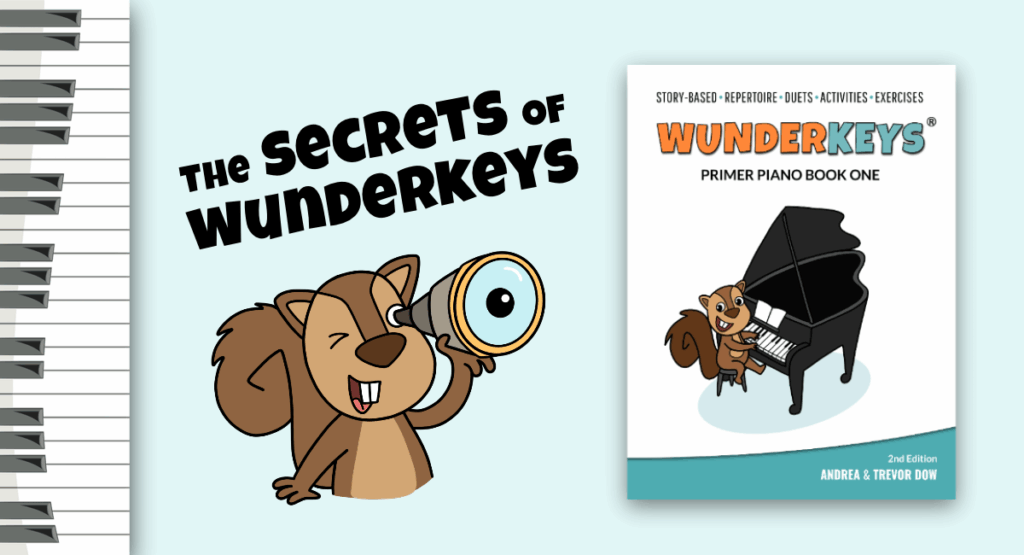
We all know WunderKeys just works. Teachers see it every day in the smiles, the progress, and the confidence of their students. But have you ever stopped to ask why it works — or why so many call it the best piano method for beginners?
That’s what this series is all about. The Secrets of WunderKeys will pull back the curtain on the innovations that make our method unlike anything else on your shelf — starting with the very first thing a child sees at the piano: Wunder Dots on the Wunder Staff.
Why Floating Finger Numbers Fall Short
For decades (and still today), children’s first piano pages have been filled with finger numbers drifting across the page. Sometimes they’re placed a little higher, sometimes lower, but without a staff, that movement is vague. There’s no clear framework. And rhythm? It doesn’t appear at all.
So what should be a magical first step into music often feels confusing. And what a terrible way to begin what could be a lifelong journey at the piano.
Wunder Dots were created to rewrite that story — and it’s this clarity that makes WunderKeys the best piano method for beginners.
The Birth of the Wunder Staff
When we pioneered Wunder Dots on the Wunder Staff, we took what old method books hinted at and made it absolutely clear.
- Pitch and Direction: Floating numbers once suggested movement, but it was muddy and hard for children to interpret. With Wunder Dots anchored on a modified staff, the relationship is unmistakable. Direction finally makes sense from the very first lesson.
- Staff Awareness: Because dots are placed on a staff, students see a real musical framework from day one. When they’re ready for traditional notation, the bridge is smooth and natural — no relearning required.
- Rhythm Understanding: Stretched dots show exactly how long to hold a note. This introduces rhythm visually and intuitively, without the need for abstract explanations.
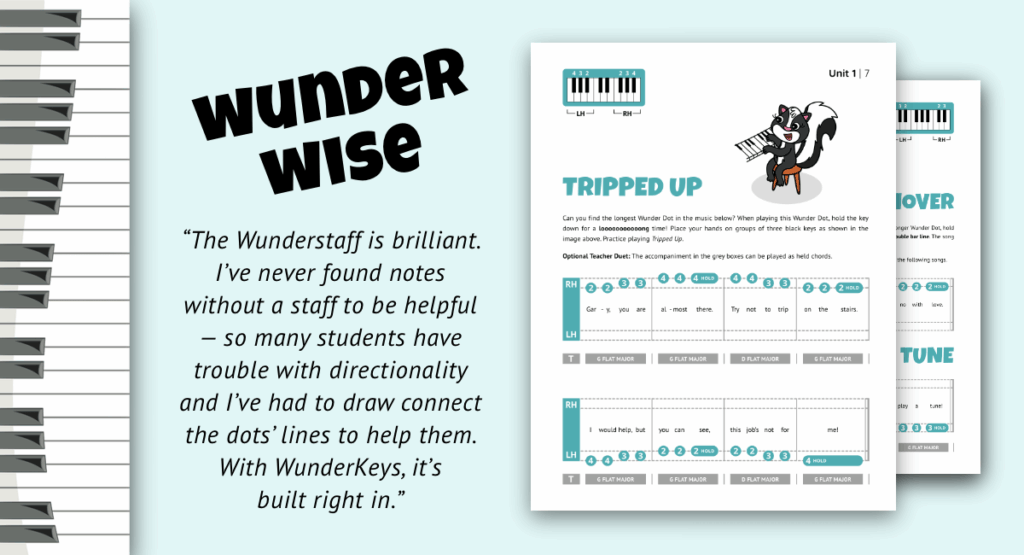
“The Wunderstaff is brilliant. I’ve never found notes without a staff to be helpful — so many students have trouble with directionality and I’ve had to draw ‘connect the dots’ lines to help them. With WunderKeys, it’s built right in.” — Amazon Reviewer
This clarity transforms a child’s very first piano page from confusing to confidence-building.
Why It Matters for Kids (and Teachers)
For a five-year-old, those first lessons shape how they feel about the piano. If their introduction feels confusing, that frustration lingers. But if it feels clear and musical, they’re hooked.
With Wunder Dots, children leave their very first lesson feeling proud. They can see what’s happening on the page, they can play something that sounds like music, and they know they’re capable. That emotional shift — from puzzlement to confidence — makes all the difference in whether a child falls in love with piano.
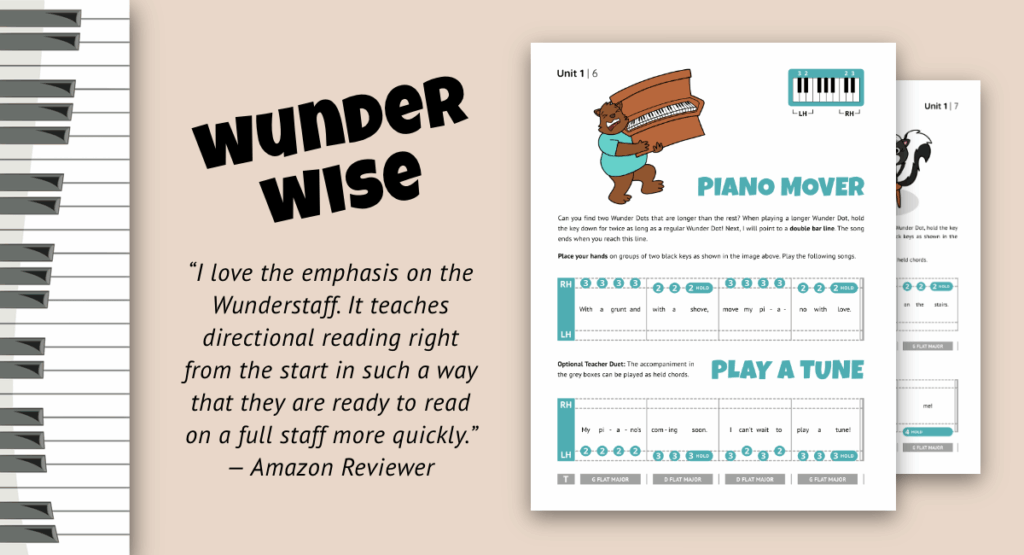
“I love the emphasis on the Wunderstaff. It teaches directional reading right from the start in such a way that they are ready to read on a full staff more quickly.” — Amazon Reviewer
And for teachers? It means smoother lessons, less time spent untangling what the page doesn’t explain, and more time making music. The notation itself does the heavy lifting. Parents hear progress at home right away, and you get to focus on artistry instead of patching holes.
A Revolution in Early Reading
The Wunder Staff isn’t just a variation on finger numbers. It is a reinvention of the very first piano experience. By making pitch, direction, and rhythm clear from the start, it ensures that a child’s introduction to piano is joyful and confidence-building — not frustrating.
And here’s the key: almost every other method book still launches children into piano with floating finger numbers, WunderKeys offers something entirely different. It makes sense. It works. And it changes how children feel about the piano from the very first note.
This is what makes WunderKeys the best piano method for beginners — it reimagines the first lesson so that students actually read music, instead of stumbling through confusing finger codes.
“The Wunderstaff concept is unique to this series and helps even children as young as five move incrementally into reading notes on the staff.” — Amazon Reviewer
That’s why teachers who adopt WunderKeys describe it as a revolution. Because when you see a brand-new student truly reading music in their very first lesson, you know you’ve given them the introduction they deserve.
The Wunder Staff That Stays
One of the most powerful aspects of the Wunder Staff is that it doesn’t disappear once students move beyond finger numbers. In the early units of Primer One, Wunder Dots give beginners clarity in pitch, direction, and rhythm. But as they transition into alpha notes (letter names placed on the staff), the framework stays the same.
This continuity means there’s no “reset” in learning. Students don’t face the jarring experience of leaving one system behind and starting over with another. Instead, they keep working on the same staff they already trust — only now with alpha notes replacing the Wunder Dots.
The result? A smoother, more confident journey into real notation. Students don’t stumble; they step forward naturally. And teachers can enjoy watching them progress without the setbacks that so often happen when method books switch systems too abruptly.
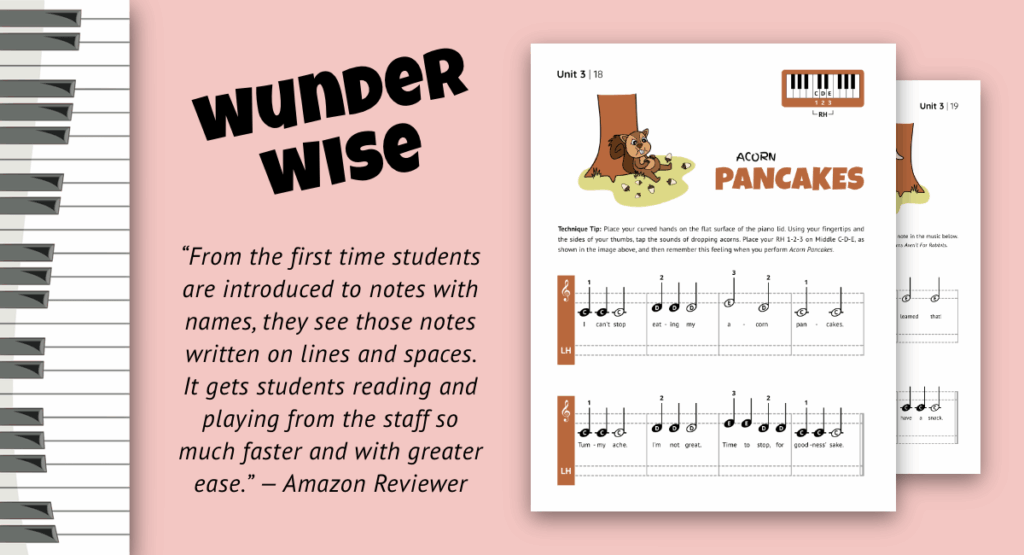
“From the first time students are introduced to notes with names, they see those notes written on lines and spaces. It gets students reading and playing from the staff so much faster and with greater ease.” — Amazon Reviewer
✨ This is Episode 1 in our series, The Secrets of WunderKeys. Stay tuned for Episode 2, where we’ll reveal another innovation hidden in plain sight…
Now Is the Time to Switch
If you haven’t already, now is the time to switch to WunderKeys. With the Second Editions of the Primer Series newly released, there’s never been a better moment to start your beginners on the right path.
In fact, it’s in the early units of WunderKeys Primer Piano Book One (Second Edition) where Wunder Dots and the Wunder Staff make their very first appearance — giving your students the clarity, confidence, and joy that should define every child’s introduction to music.